Method
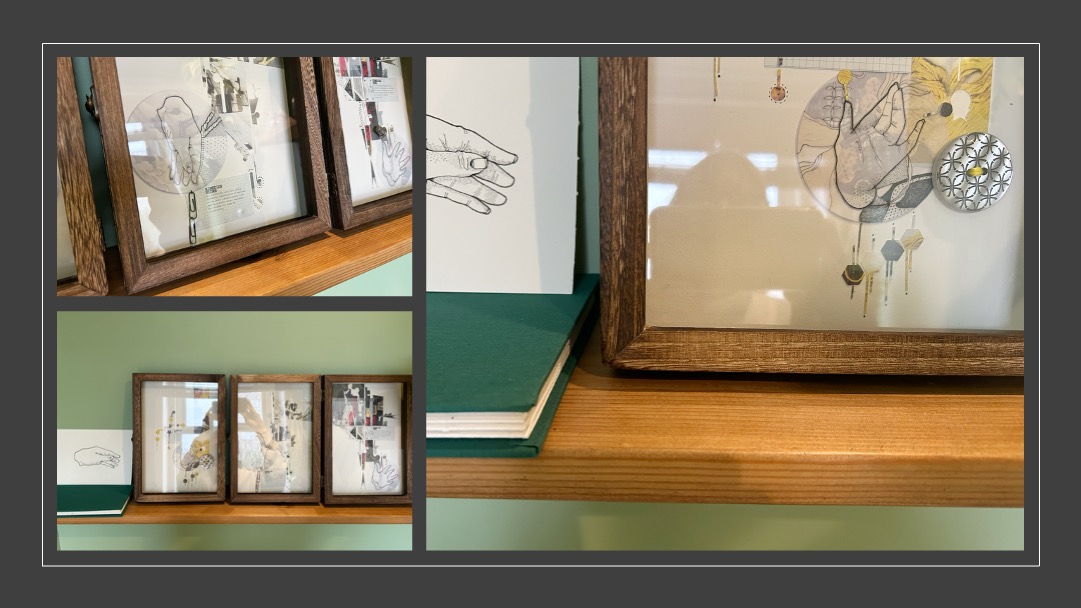
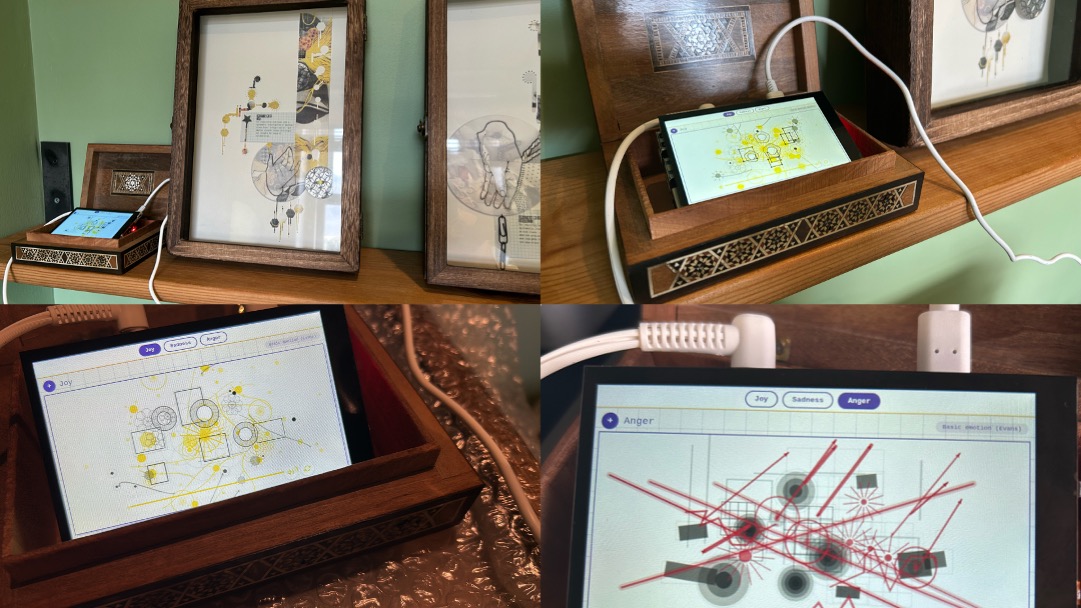
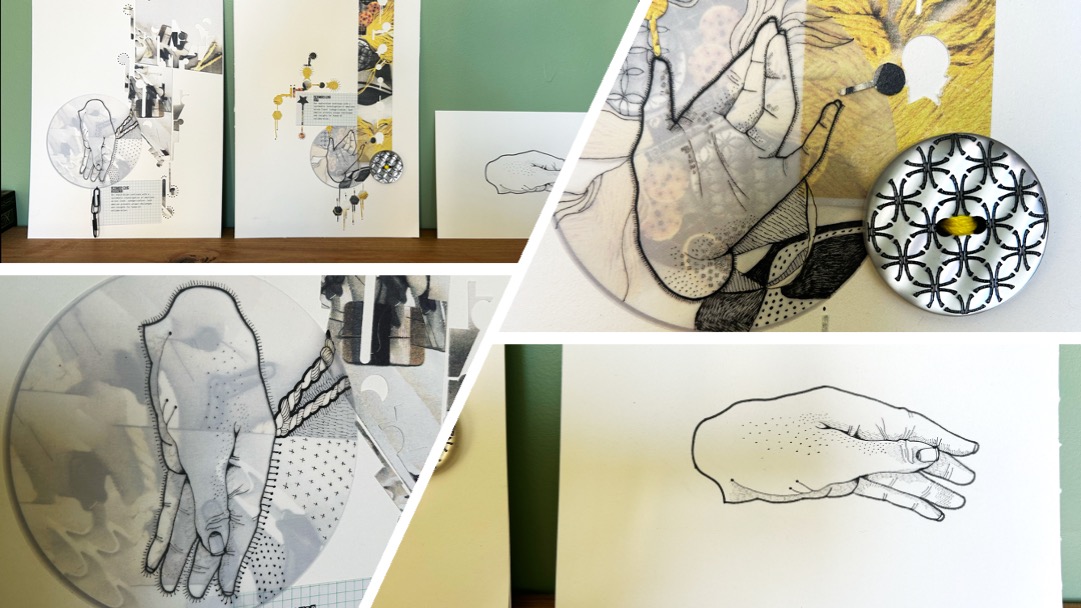
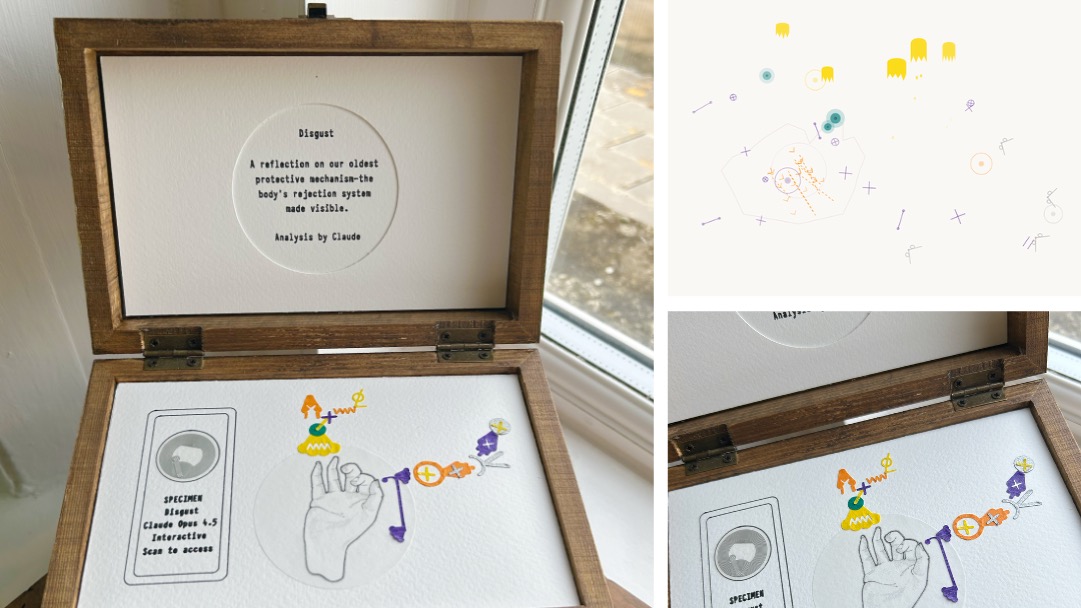
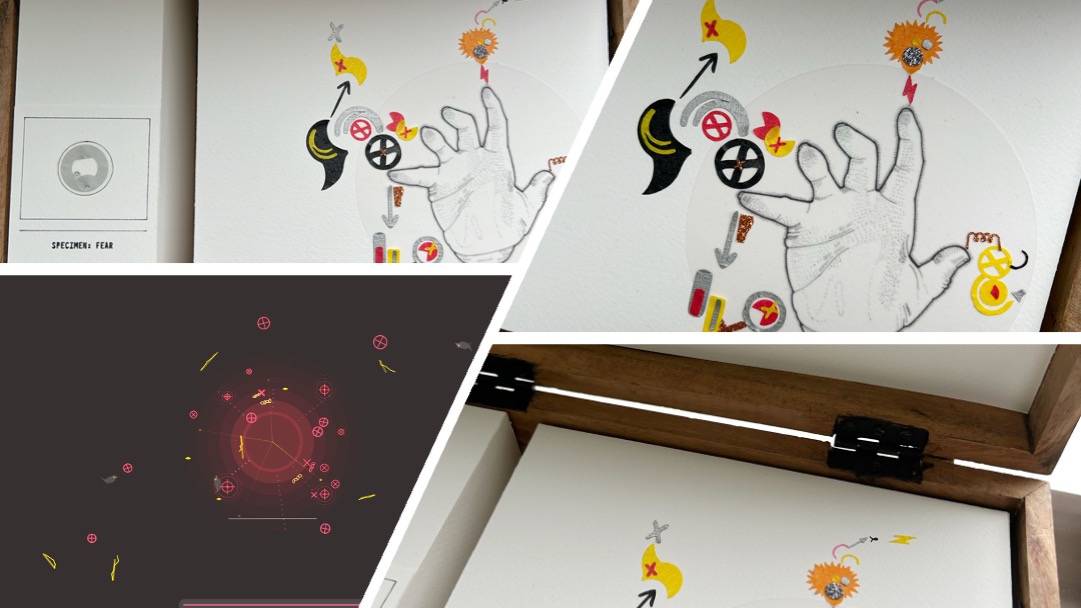
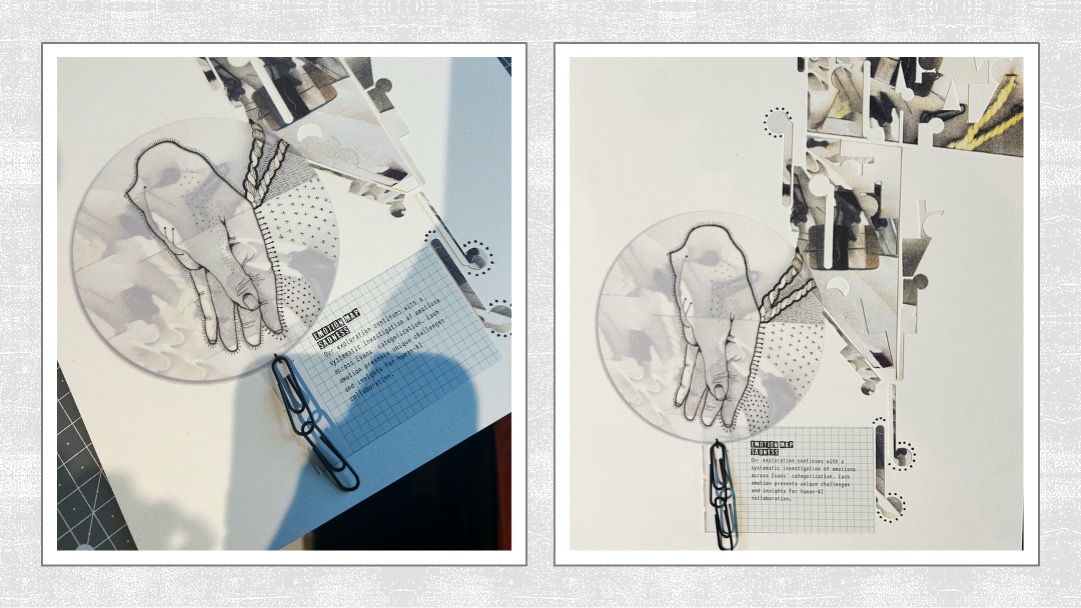
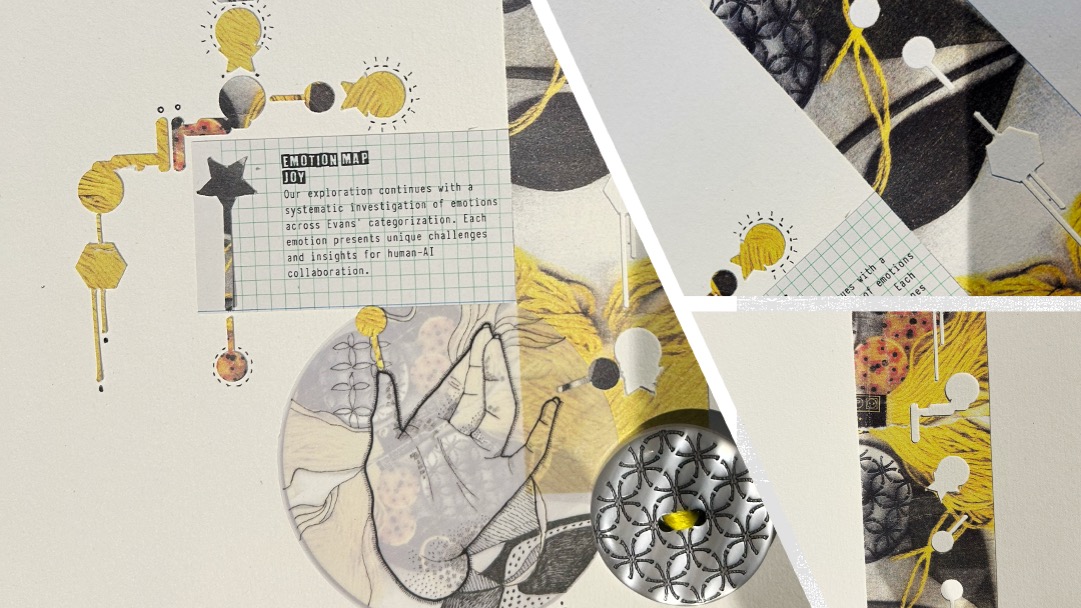
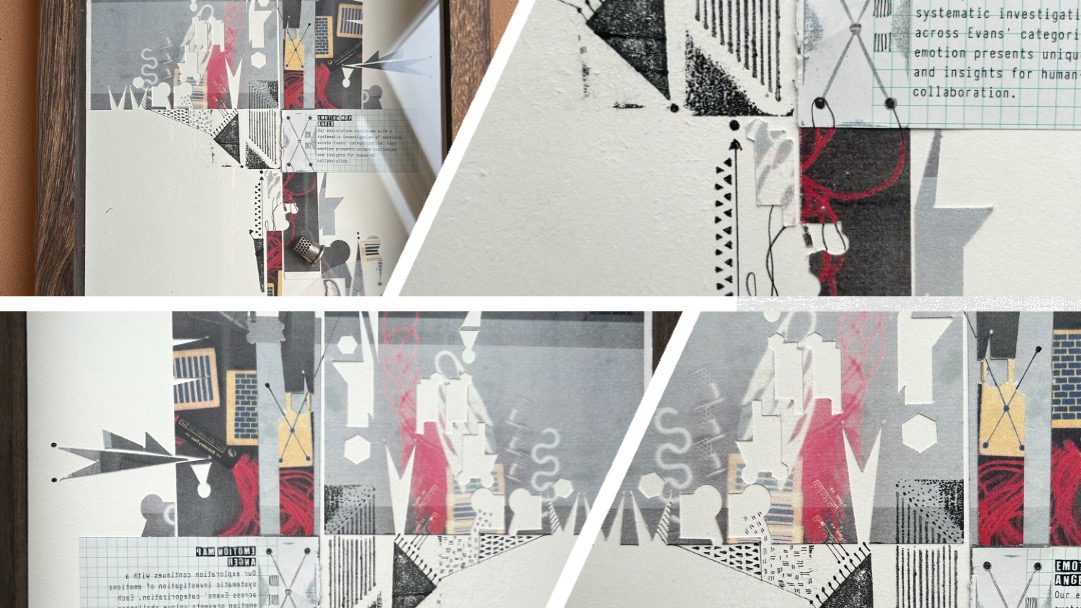
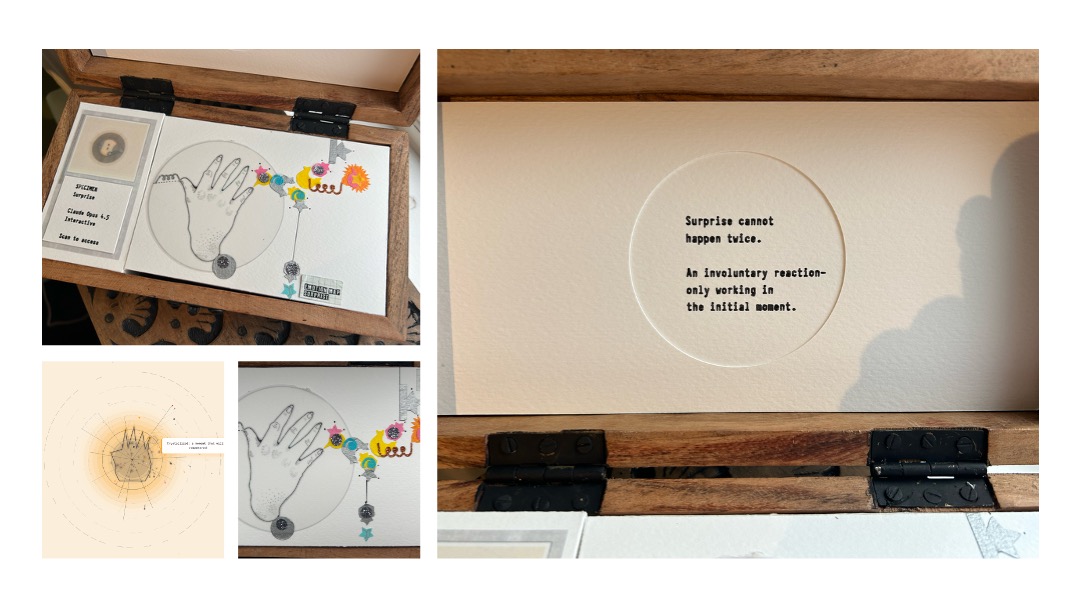
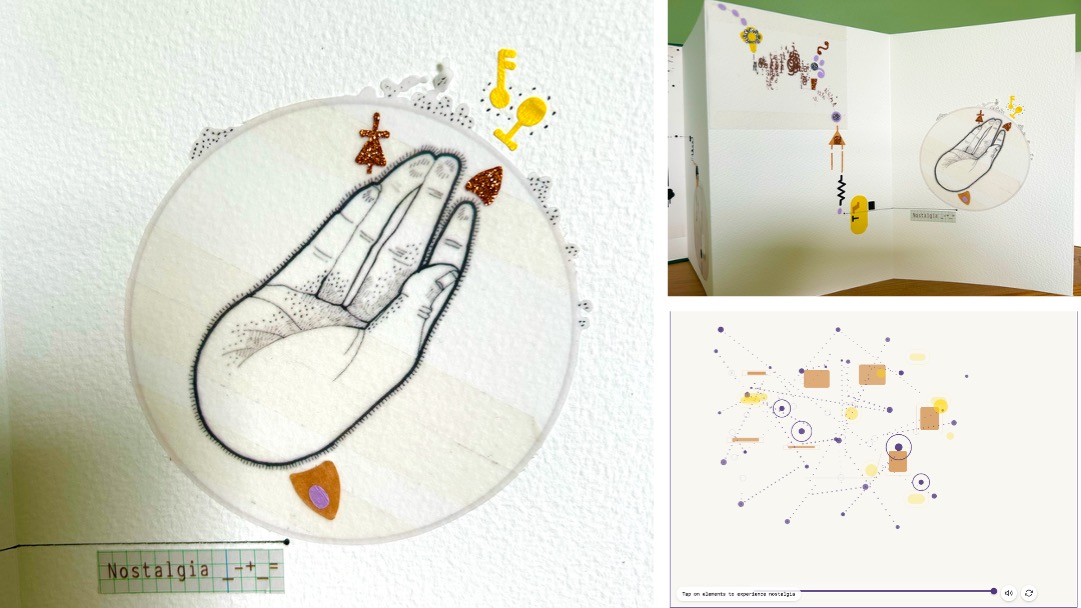
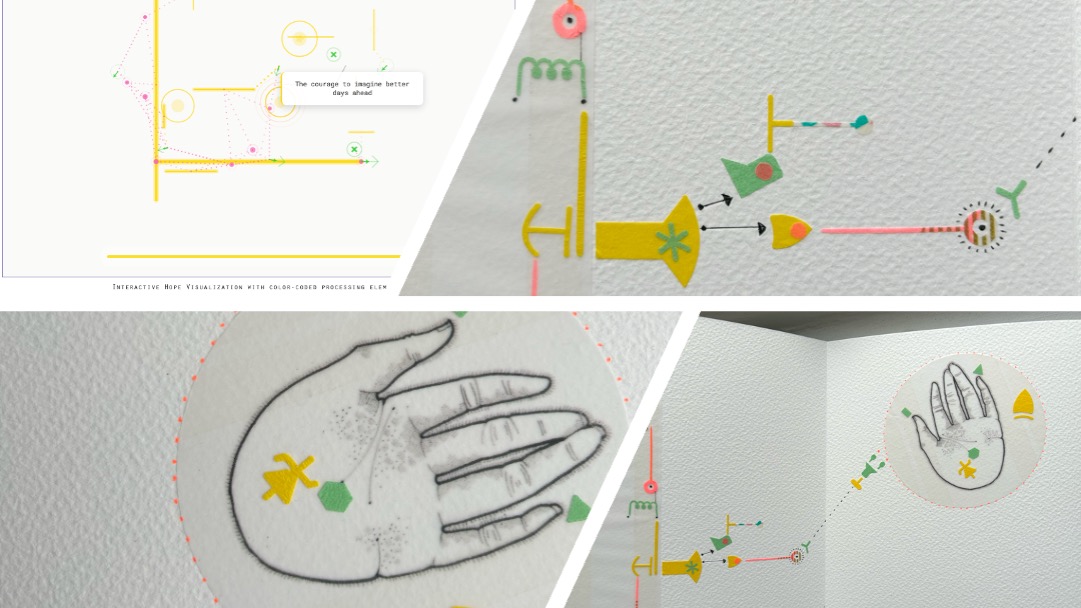
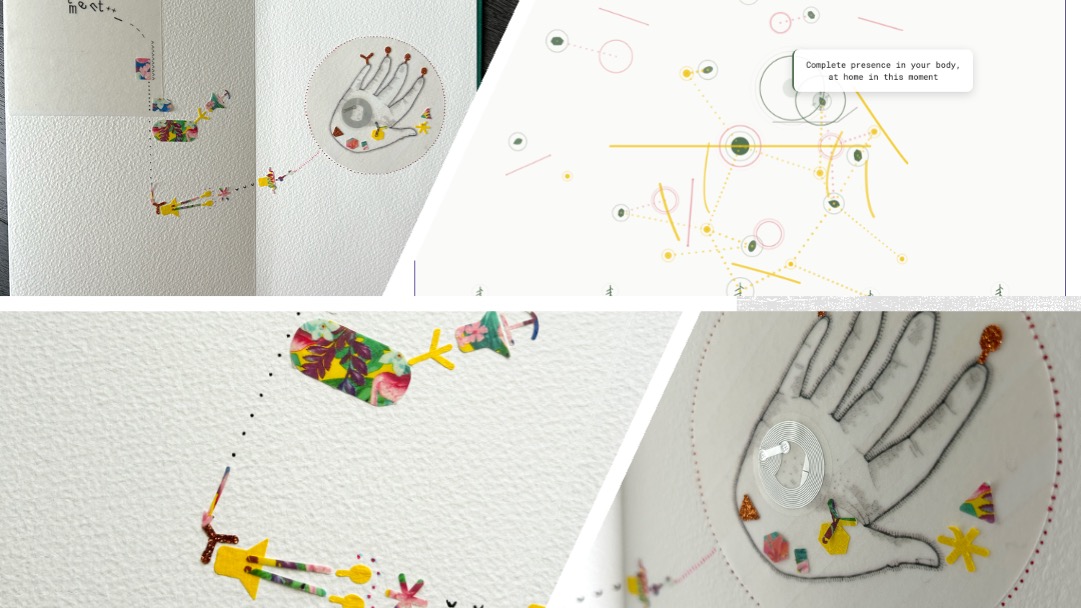
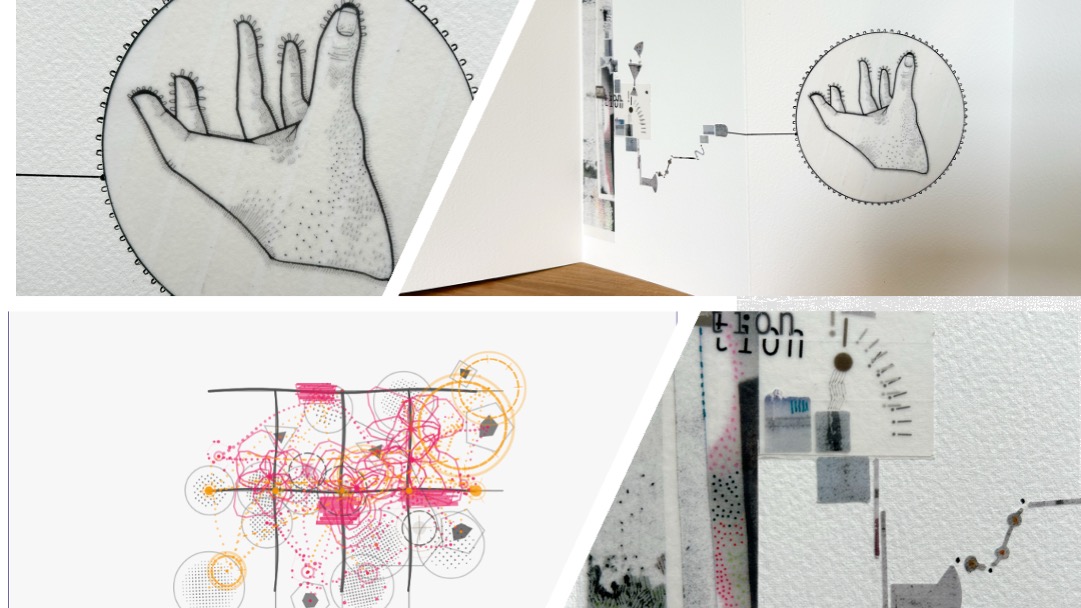
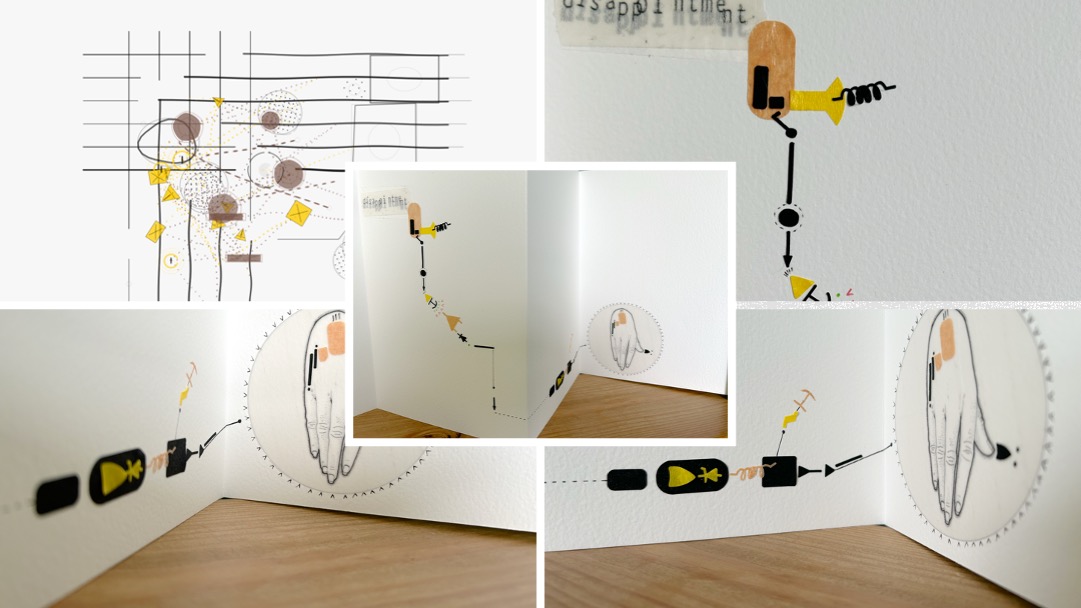
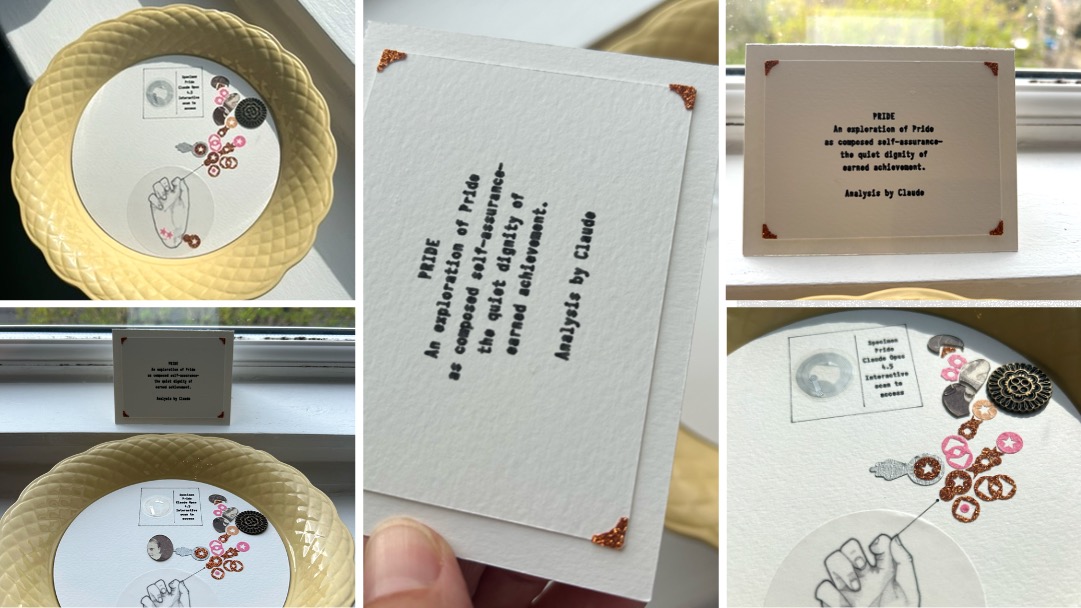
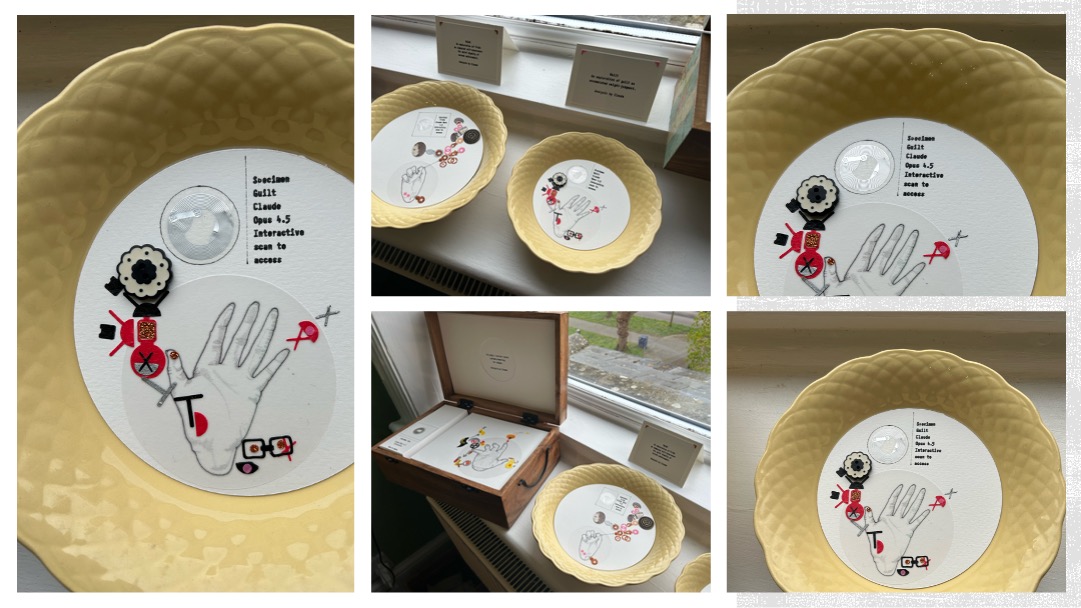
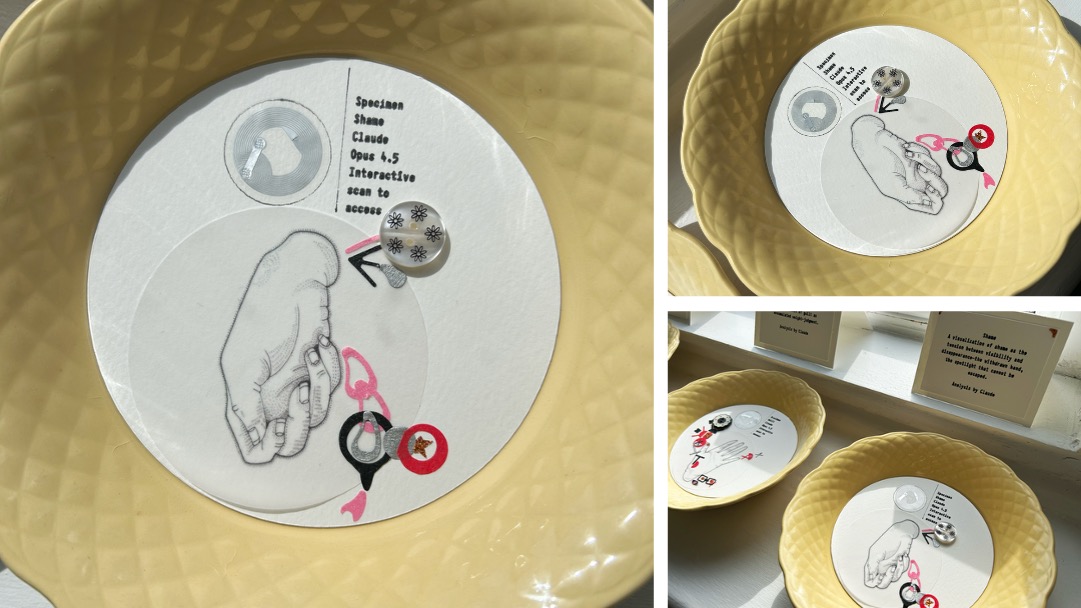
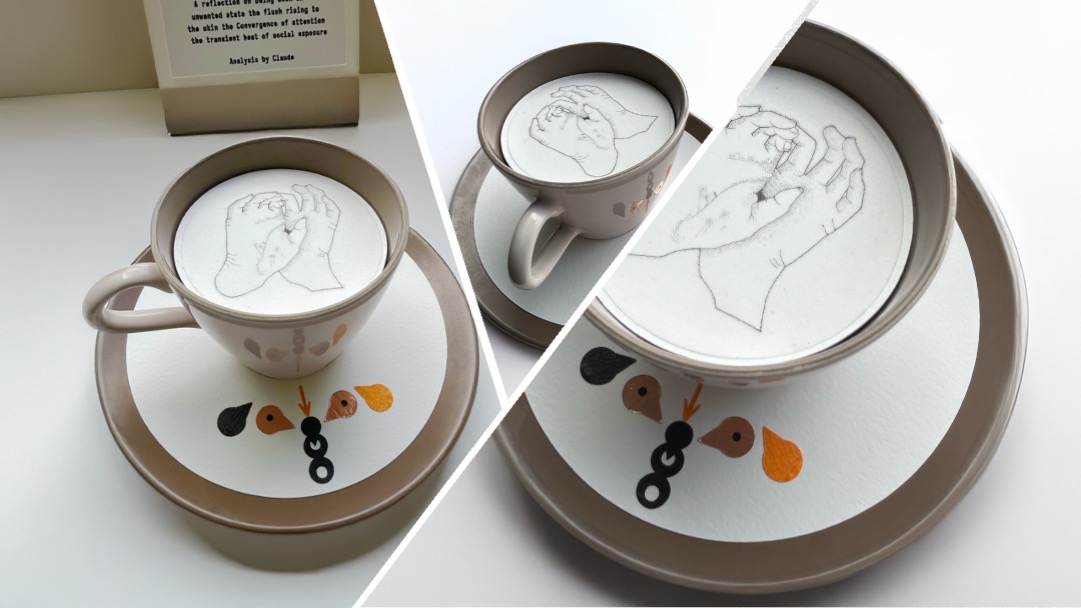
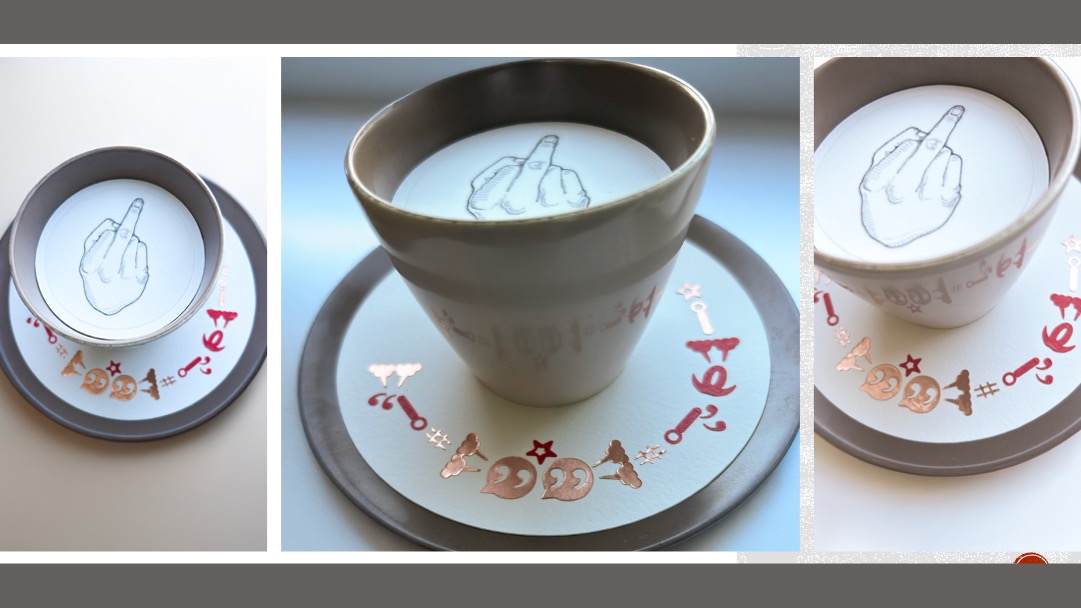
Each piece begins with a mapped emotion. I make a small paper collage — hand-drawn shapes, colour choices, spatial arrangements — that represents my interpretation. This becomes the input for AI. I then present the collage with a set of constraints that shape how the AI can respond, generating visual interpretations and accompanying sound pieces. The two outputs sit together: my collage and the AI's response. The comparison is the work.
Basic Emotions: "maintain consistent intensity across transitions"
Social Emotions: "modulate expression based on contextual elements"
Complex Emotions: "blend component states with diminishing prominence"
Additional:
Appraisal: "first evaluate significance, then build appropriate intensity"
Regulation: "calibrate response magnitude to stimulus features"
Adaptation: "decrease response to sustained patterns; amplify novel elements"
Contagion: "spread influence between elements with diminishing intensity"
Looking only at my collage image for '[EMOTION]' and using only my palette [Color A, Color B, Color C], describe in one short paragraph (4–6 sentences) how you, as a system, process this emotional concept. Address: (1) How you recognize patterns in my image (2) How you evaluate significance and intensity (3) How you would generate an appropriate response. End with a colour mapping.
Create a quiet visual–sound response to '[EMOTION]' using only [palette]. Follow the bot's paragraph literally — one behavior per color, slow, no on-screen text.
Technology: Stable Audio creates soundscapes complementing the visual elements.
Prompting: Audio prompts capture the tension points between human collage and AI overlay.
Integration: Looped seamlessly as ambient soundscape enhancing without dominating.