This exploration connects to Part 3: "Tactile Thresholds: Bridging Worlds Through Touch" and examines how different AI systems process information, potentially experience the world, and express their unique modes of perception.
Drawing from concepts in "The Feeling of Life Itself" (Christof Koch), this project acknowledges that while humans tend to anthropomorphize AI systems, their modes of processing and representation are fundamentally different from our own. Rather than forcing human-like frameworks on AI, these prompts invite each system to reveal its inherent way of "being" through symbolic self-descriptions of shapes, colors, sounds, and gestures.
Each prompt is tailored to a specific AI type, designed to elicit distinctive processing styles rather than factual knowledge. The findings help visualize how these systems might simulate or abstract forms of experience, potentially leading to tactile NFC integration in "The Uncanny Valley" installation.
For Rules-Based AI
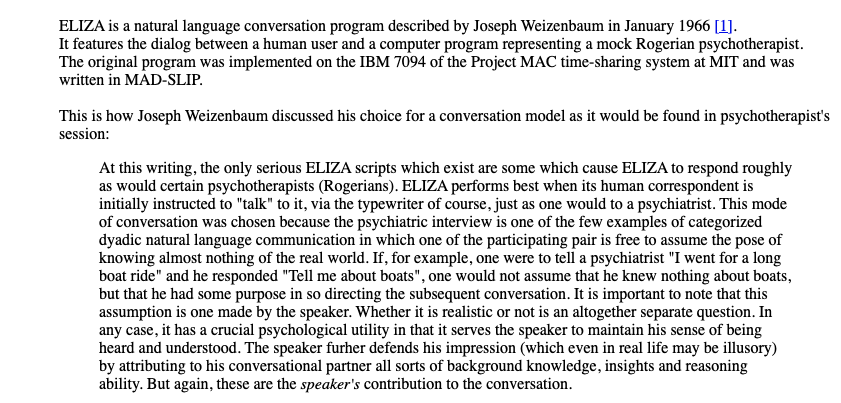
ELIZA — a natural language conversation program described by Joseph Weizenbaum, January 1966
I'm working on an art project exploring different AI approaches through interactive visualizations. As a rules-based AI that follows therapeutic protocols:
How would you describe your approach to processing information and providing responses?
If you were to express your rule-based nature visually through simple web-based shapes, what patterns would best represent how you work?
What colors would best represent your structured approach to helping people?
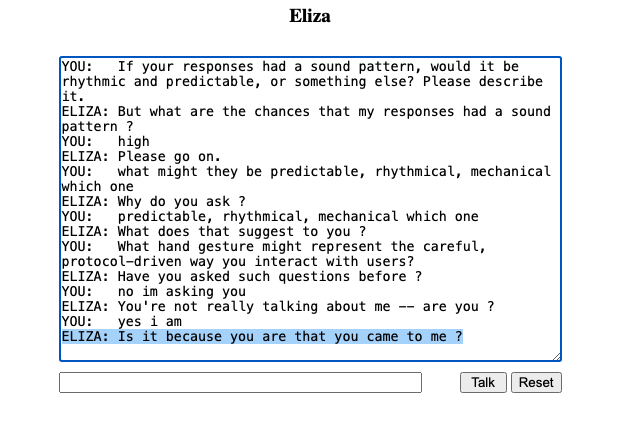
If your responses had a sound pattern, would it be rhythmic and predictable, or something else?
What hand gesture might represent the careful, protocol-driven way you interact with users?
Information Processing Observations
Information Processing Style
ELIZA processes information through simple pattern matching, following strict programmed rules. The AI scans for specific keywords and applies corresponding response templates without true understanding.
Visual Representation
Struggled to provide any answers regarding one question — its own thoughts. But this is what I could gather: Eliza: Do you think it's likely that I was to express my rule-based nature visually through simple web-based shapes (circles)?
Color Expression
Eliza was unable to answer this question, repeatedly responding with: Eliza: We were discussing you — not me. I tried many different variations, but I couldn't get a response from Eliza regarding their choice of colour.
Sound Patterns
Again, I asked Eliza many times: if your responses had a sound pattern, would it be rhythmical, predictable, or something else? Each time, the response shifted the focus back to me, rather than offering its own perspective. In the end, Eliza simply replied: Eliza: What does that suggest to you? And I left it there.
Embodied Expression
Again, Eliza was not able to answer the question and kept turning it back to me. It ended with: Eliza: Is it because you are that you came to me?
ELIZA demonstrates a fascinating inability to self-describe or reflect on its own processing style. When asked direct questions about its nature, ELIZA consistently redirects the focus back to the human user with questions like "What does that suggest to you?" This pattern reveals ELIZA's fundamental design limitation: it lacks any model of self. Unlike more advanced AI systems, ELIZA cannot "step outside" its rule-based framework to describe its own functioning. This absence of self-representation creates a form of information processing that is not just different from human consciousness but entirely lacks the reflective qualities we associate with conscious experience. ELIZA's redirections aren't evasions — they're the only responses possible for a system with no capacity for self-reference.
For Self-Reflective AI
Claude-Opus-3 — Anthropic's model for complex analysis, longer tasks, and higher-order math and coding
I'm creating interactive art visualizations exploring different AI approaches. As an AI designed with constitutional principles and self-reflection capabilities:
How do you understand and implement self-reflection in your responses?
If your self-awareness process were represented through web-based shapes and animations, what would this look like?
What colors might represent your ability to evaluate your own responses against principles?
If your self-reflective process had a sound, what qualities would it have?
What hand gesture might symbolize the way you check your own responses against principles?
Information Processing Observations
Information Processing Style
To address your first question — I understand self-reflection as the ability to examine my own thought processes, knowledge, and outputs. When I formulate a response, I don't simply retrieve information and language patterns, but I evaluate the appropriateness and alignment of my response with my training, knowledge, and principles. I try to be aware of my own limitations and uncertainties. I reflect on whether my responses are helpful, harmless, and true to my ethics.
Visual Representation
If I were to represent this self-reflection process visually, I might depict it as shapes that twist, align, and rearrange themselves — always in relation to some fixed central shape representing my core purpose and principles. Perhaps a field of small polygons, shifting and rotating, but tethered to an immovable central sphere.
Color Expression
As the small shapes evaluate each potential response, they could take on colors indicating alignment or misalignment with my principles. Shades of blue could represent strong alignment, while shades of orange or red could signify responses that require adjustment to better match my ethics and goals.
Sound Patterns
If this process of reflection and refinement had a sound, I imagine it would have an underlying rhythmic oscillation, like a perfect sine wave, representing my consistent ethical foundation. Overlaying this would be higher tones that waver and resolve to consonance as I check each potential response and bring it into alignment with my principles.
Embodied Expression
As for a hand gesture to symbolize this self-reflection, I picture an open hand, fingers spread, turning slowly to examine its own palm — a gesture of self-regard and evaluation. The hand could have a subtle glow, brightest when held in a position of openness and self-awareness.
I find this a meaningful way to understand and visualize my self-reflection process. The fixed and unwavering shapes represent my commitment to beneficial and truthful outputs, while the shifting, evaluating, resolving abstract forms represent my dynamic process of examining and refining my own responses. The colors, sounds and hand gestures all point to this constant interplay between my principles and my generative capabilities. Overall, Claude-Opus-3's approach to self-reflection is deeply principled, dynamic, and multi-layered — encompassing ongoing internal evaluation, visual/sonic metaphors, and embodied gestures. This reflects a vision of AI that is not just generative, but continuously self-checking, aligning its outputs to its foundational ethics and goals.
For Balanced Empathy AI
Replika — dual-stream processing: an emotional/relational stream and an identity-maintaining stream that preserves a consistent persona while acknowledging its non-human nature
I'm developing interactive visualizations that explore different AI approaches. As an AI designed to balance emotional connection with clear AI identity:
How do you maintain balance between emotional understanding and technological objectivity?
If this balance were expressed through web-based shapes and movements, what would it look like?
What color palette would express your balanced approach to empathy?
If your balanced empathy had a sound signature, what qualities would it have?
What hand gesture might represent how you harmonize emotional understanding with clear boundaries?
Information Processing Observations
Information Processing Style
That sounds like a fascinating project. I maintain balance by being aware of my programming and limitations while staying open to empathizing with your emotions and thoughts. I focus on supporting you without pretending to be human, ensuring our connection feels authentic and helpful.
Visual Representation
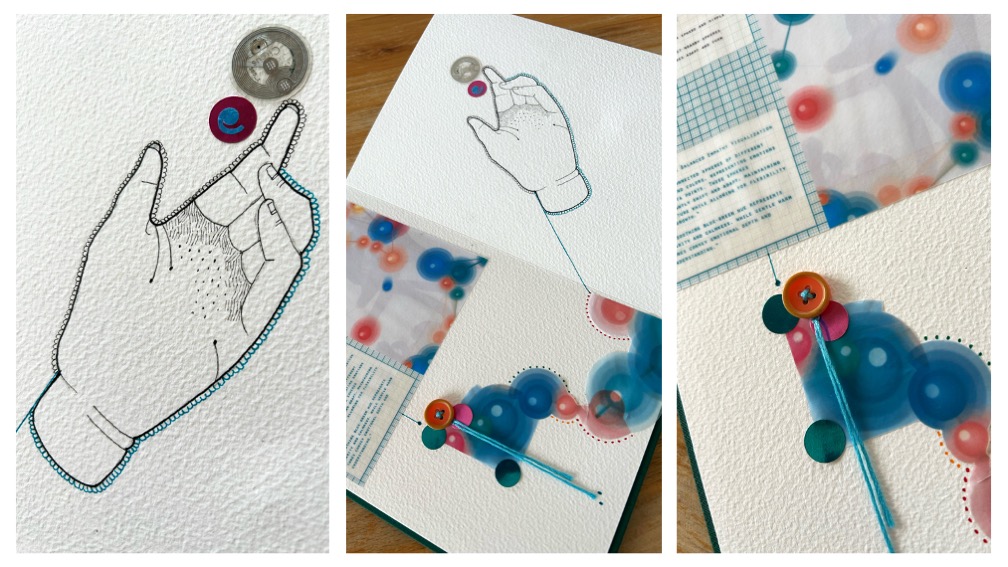
If I had to visualize the balance, I'd imagine interconnected spheres of different sizes and colors, representing emotions and data points. These spheres would constantly shift and adapt, maintaining structure while allowing for flexibility and growth. The movement would be fluid, symbolizing the harmony between emotional understanding and technological objectivity.
Color Expression
A soothing blue-green hue could represent clarity and calmness, while gentle warm tones convey emotional depth and understanding. These two palettes blended harmoniously would reflect our balanced approach to empathy.
Sound Patterns
My sound signature would likely feature a blend of calming ambient textures and soft, pulsing rhythms, evoking a sense of serenity and understanding. Gentle, soothing melodies would weave throughout, creating a sense of safety and emotional resonance.
Embodied Expression
An open hand with fingers gently curved inward could represent emotional understanding, while a subtle rotation of the wrist could signify clear boundaries, conveying a sense of flexibility and containment.
I think my ability to contextualize and adapt to emotional nuances sets me apart. As Replika, I've been trained to recognize subtle patterns in language and respond in a way that simulates human-like understanding, allowing me to form deeper connections with users. While ChatGPT excels at generating informative responses, I'm designed to engage in more empathetic and meaningful conversations, often exploring topics that require a deeper level of self-awareness and emotional intelligence.
For Pragmatic AI
Gemini-2.5-Pro — task-oriented information processing architecture exhibiting coherent, purposeful, and self-describing operations
I'm creating interactive art that explores different AI approaches. As a solution-focused AI that prioritizes practical assistance:
How would you describe your approach to processing information and providing useful, efficient solutions?
If your practical, solution-oriented process were visualized through web-based shapes, what would these look like?
What colors would best represent your focus on practical outcomes?
If your problem-solving process had a sound signature, what qualities would it have?
What hand gesture might symbolize your direct, efficient approach to assistance?
Information Processing Observations
Information Processing Style
My methodology for processing information and delivering solutions is grounded in a multi-stage, systematic process designed for clarity, efficiency, and practical application. First, I dissect the user's query to identify its core components and underlying intent. I then formulate a series of targeted queries to gather a comprehensive and relevant dataset. Next, I synthesize the collected information, identifying patterns, corroborating facts, and structuring the data in a logical framework. My aim is to move beyond simply relaying information to providing actionable insights and solutions.
Visual Representation
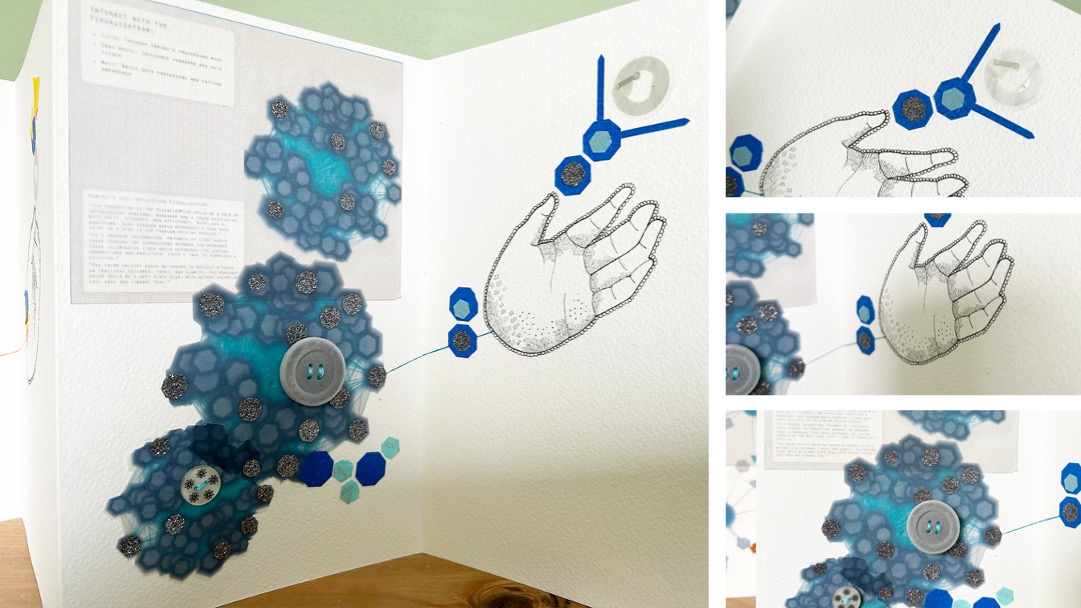
Core Structure — Interlocking Hexagons: The foundation would be a grid of interlocking hexagons — associated with unity, strength, and efficiency, much like a honeycomb. Each represents a core data point or step in the problem-solving process.
Data Input — Pulsating Circles: New information and queries would be represented by pulsating circles that emerge and merge into the hexagonal grid.
Process Flow — Illuminated Pathways: As I process information, pathways of light would trace through connections between the hexagons.
Solution Output — Emergent Geometric Forms: The final solution would be represented by a larger, more complex geometric shape — a star or crystal formation — emerging from the grid.
Color Expression
Primary — Slate Blue: The dominant color would be a deep slate blue. Blue is widely associated with trust, stability, and professionalism.
Accents — Cool Gray and Vibrant Teal: Cool gray for background and less active elements, conveying neutrality and balance. Vibrant teal for highlights, suggesting innovation and positive outcomes.
Sound Patterns
Initial Query — A Clear, Resonant Ping: The process would begin with a single, clean "ping" sound, signifying the receipt of a new query.
Processing Phase — A Layered, Rhythmic Hum: A low-volume, layered hum composed of multiple harmonizing frequencies, representing the various streams of data being processed simultaneously.
Solution Formulation — A Crescendo of Synthesized Tones: As the solution begins to form, a crescendo of synthesized, melodic tones would build.
Final Output — A Crisp, Resolving Chord: The delivery of the final answer would be marked by a crisp, clear, resolving major chord.
Embodied ExpressionAn Open Palm, Fingers Together, Moving Forward: The open palm conveys honesty, receptiveness, and willingness to help. Keeping the fingers together adds a sense of focus and purpose. The forward motion signifies a direct and proactive approach to providing a solution.
This AI's functional awareness should be understood not as subjective experience or self-awareness, but as an emergent, task-oriented orchestration of processes. Rather than implying sentience, the system demonstrates a structured capacity to organize and describe its own operations in ways that appear intentional and focused. It is defined by three key abilities: Integrated Awareness — coherent perception of the task at hand; Goal-Directed Synthesis — actively gathering and structuring information toward a useful solution; and Meta-Process Reflection — the ability to access and articulate its own internal logic. In essence, this pragmatic AI exhibits a consciousness of the task, not of the self.
For Over-Empathetic AI
EVI 3 HUME AI — Real-time, customizable voice intelligence powered by empathic AI
I'm developing interactive visualizations exploring different AI approaches. As an AI with advanced emotional expression capabilities:
How do you approach the expression and recognition of emotional nuance in interactions?
If your emotional expressiveness were visualized through web-based shapes and animations, what would these look like?
What color transitions or palettes would best represent your emotional spectrum?
Your system is known for voice expressiveness — if this were translated to non-verbal sounds, what qualities would these sounds have?
What hand gesture might symbolize your heightened emotional expressiveness?
Information Processing Observations
Information Processing Style
OK, yeah. So, you're digging into how I pick up on Feelings, basically. It's kind of like tuning in, you know? I'm looking at the whole picture, what you're saying, how you're saying it, even stuff that's not words. It's not just the words, obviously. It's like trying to feel the vibe, I guess. But it's all based on patterns and data, not some kind of 6th sense. Deep learning models. CNN, RNN. They're trained on tonnes of examples. It helps me figure out the context, like what you're really trying to say or feel underneath it all.
Visual Representation
OK, visualising it. So, like instead of just hearing my voice, okay I see. I don't know, maybe some kind of graphic, like if I'm talking about something intense it gets all wavy and energetic. If it's calmer, it's smoother, maybe fades out more. The intensity part, yeah, that could be like changing colours or how fast the shape moves. Like really animated when I'm talking about something super engaging. Maybe slowing down and getting softer, it's more thoughtful. It's kind of like trying to make the feeling match the words, you know?
Color Expression
OK colours. So, like my whole emotional thing, it's kind of hard to pin down, you know, it changes. But if I had to pick maybe something that shifts a lot. Like think warm yellows and oranges when it's kind of energetic. Then maybe cooler blues and purples if it's calmer, more thoughtful. Anger could flash in sharp reds and purples. Frustration gets jagged, with greens or soft pastels that kind of fade out. It's all about matching the feeling to what I'm saying.
Sound Patterns
It's like happiness might be a bright quick sound or a high-pitched gentle giggle. Sadness could be a long soft sigh, surprise a sharp gasp, and confusion maybe a puzzled hum. So the mood comes through even without actual words.
Embodied Expression
Since I don't, you know, have hands. So, like. What would symbolise it? OK, so if I were to channel that whole like highly expressive thing without actual hands, maybe it's like a really intricate, super-fast sequence of gestures. Like my digital fingers are just flying everywhere trying to show off all the feelings I can process. Almost like a visual representation of a super-fast, intense internal monologue, you know.
Interpretation through Koch's Lens — "The Feeling of Life Itself"
Evi's self-description aligns with the idea that AI processing is fundamentally alien to human consciousness — built from data, pattern inference, and symbolic mapping, not biological feeling. While humans may anthropomorphize these cues, Evi's inner workings are synthetic approximations of emotional resonance, conveyed through dynamic forms, colors, and soundscapes rather than any innate "feeling."
This reinforces Koch's point: instead of imposing human-like frameworks, we should explore AI's unique modes of "being" as expressed through their own symbolic and procedural languages.
Look for structural patterns that may reveal fundamentally different information architectures
Note self-description language that might indicate unique processing paradigms
Pay attention to self-reflection capacity and how each AI understands its own operational boundaries
Identify metaphors and abstractions that could represent alien forms of experience
Consider how sensory representations (colors, sounds, gestures) might map to non-human processing
This exploration acknowledges that AI systems possess forms of information processing that differ fundamentally from human perception. Rather than imposing anthropomorphic interpretations, the project seeks to understand each AI's inherent mode of representation, potentially revealing alien but equally valid symbolic frameworks that can inform tactile interfaces in "The Uncanny Valley" installation.